

Patrioci i patrioci
http://www.zrobtosam.com/PulsPol/Puls3/index.php?sekcja=1&arty_id=9852
Puls POLONII
PP: Kontynuujemy nasz serial "Prawdziwi solidarnościowcy" z okazji 30. rocznicy powstania Solidarności. Zofia Kwiatkowska-Dublaszewska urodziła się 28 czerwca 1949 roku w Krakowie. Ukończyła Technikum Ekonomiczne dla Pracujących w Sopocie (1974). W chwili rozpoczęcia strajków na Wybrzeżu w 1980 roku zatrudniona była w Przedsiębiorstwie Transportowo - Sprzętowym Budownictwa Transbud Oddzial Nr 3 w Gdyni. Bierze czynny udział w wydarzeniach sierpniowych: jest współorganizatorką strajku w Transbudzie, delegatem do Międzyzakładowego Komitetu Strajkowego w Stoczni Gdańskiej im. Lenina.
W NSZZ Solidarność od września 1980 roku, sekretarz komisji zakładowej w swoim zakładzie pracy. Członek Społecznego Komitetu Budowy Pomnika Ofiar Grudnia 1970 w Gdyni. Wraz z Longinem Stojkiem, Aleksandrem Składanowskim i Czesławem Bigusem organizuje w Transbudzie strajk protestacyjny przeciwko wprowadzeniu stanu wojennego. 19 grudnia 1981 aresztowana, osadzona w AŚ w Gdańsku, skazana przez Sąd Marynarki Wojennej w Gdyni na 5 lat więzienia, osadzona w ZK w Fordonie, w Grudziądzu, ponownie w Fordonie. Wyrok zmniejszono do 3,5 roku więzienia, 23 grudnia 1982 Sąd Penitencjarny udziela przerwy w karze na trzy miesiące, przedłużonej później na następne trzy miesiące , ze względu na stan zdrowia (wkrótce lekarze decydują o operacji). Uchwałą z dnia 4 lipca 1983 roku Rada Państwa darowała Zofii Kwiatkowskiej odbywanie kary na okres próbny 3 lat.
Prawdziwi solidarnościowcy: Andrzej Pokorski
Do czerwca 1984 roku pozostaje bez pracy, po czym zatrudniona zostaje w Transbudzie w Gdańsku. W grudniu 1984 roku wraz z Andrzejem Kołodziejem, Ewą Kubasiewicz i Stanislawem Kowalskim zakładają Oddział Trójmiasto Solidarności Walczącej. Organizuje kolportaż niezależnych wydawnictw tej organizacji, m.in. podziemnego czasopisma Poza Układem. Współpracuje z Komisją Charytatywną przy kościele oo. Redemptorystów w Gdyni, współorganizuje Msze za Ojczyznę.
Inwigilowana i rozpracowywana przez Slużbę Bezpieczeństwa w ramach akcji pod kryptonimami "Renesans", "Mrowisko" i " Gniazdo". Aresztowana ponownie w dniu 14 stycznia 1986 roku, przebywa w aresztach śledczych w Gdańsku i Warszawie. Zwolniona zostaje na mocy amnestii w dniu 21 sierpnia 1986 roku. Przybywa do Australii z paszportem "w jedną stronę" w czerwcu 1987 roku. Działa w Związku Więźniów Politycznych Okresu Stanu Wojennego. W 2010 uhonorowana przez Prezydenta Lecha Kaczyńskiego Krzyżem Komandorskim Orderu Odrodzenia Polski. Także przyznany został Krzyż Solidarności Walczącej.
Tygodnik Polski: Była Pani pozbawiona wolności dwukrotnie. Jak doszło po raz pierwszy do aresztowania?
Współorganizowałam w Transbudzie strajk protestacyjny przeciwko wprowadzeniu stanu wojennego. Strajk zostaje rozbity 18 grudnia 1981 roku, a następnego dnia o godzinie 6 rano funkcjonariusze SB byli już w moim mieszkaniu, przeprowadzili rewizję i osadzili mnie w Areszcie Śledczym w Gdańsku. 31 grudnia 1981 zostałam skazana w trybie doraźnym przez Sąd Marynarki Wojennej w Gdyni na karę 5 lat pozbawienia wolności za złamanie postanowień dekretu o stanie wojennym. W procesie rewizyjnym kara ta zmniejszona została do 3 lat i 6 miesięcy więzienia. Karę odbywałam w zakładach karnych w Fordonie i Grudziądzu.
TP: Ten pobyt w celi znają miliony Polaków dzięki Piotrowi Zarębskiemu...
Piotr Zarębski, reżyser filmu "Więźniarki"
|
Moimi koleżankami w celi były m.in. znane z działalności opozycyjnej - Wiesia Kwiatkowska, Iza Lipniewicz, Ania Niszczak, Ela Mossakowska, Jola Wielgucka, no i Ewa Kubasiewicz, która dostała najwyższy wymiar kary w stanie wojennym: 10 lat! Po latach wszystkie zostałyśmy bohaterkami filmu dokumentalnego w reżyserii Piotra Zarębskiego pt. "Więźniarki". Film ten był nagrywany także w Australii.
TP: Czy w celi były też agentki SB, a jeśli tak, czy zdawałyście sobie z tego sprawę?
Myślę, że miałyśmy szczęście. Zawsze ktoś kogoś znał i w sumie wiedziałyśmy o sobie kto jest kto. Miałyśmy jedną dziewczynę, która nie uczestniczyła w naszych akcjach, takich, jak głodówki. W niedziele nie chodziła na msze i w tym czasie pisała, dużo pisala. Ne wiemy, gdzie i do kogo. Była tajemnicza. Nie odczułyśmy jednak reakcji z zewnątrz. Myślę, że rzeczywiście miałyśmy szczęście. Jednak podczas drugiego aresztowania na Rakowieckiej w Warszawie ewidentnie mialam agentkę w celi. Jednak o tym przekonałam się dopiero po wyjściu. Nie zyskała nic, bo ja nigdy nie byłam rozmowna. Ostatnia jej próba, gdy wychodziłam na wolność, też jej nic nie dała. Prosiła mnie o zaniesienie grypsu na zewnątrz. Gryps odniosłam, lecz nie podobala mi sie atmosfera wśród odbiorców grypsu. Powiedziałam, że proszono o odniesienie – zrobiłam - i to wszystko. Dzisiaj wiem, że było to specjalne mieszkanie dla służb. Stąd mnie mieli w Krakowie, gdzie też przed wyjazdem do Australii zatrzymano mnie na parę godzin. Zreszta mojego brata zwinieto też. Kompletnie w nic nie zaangażowanego.
Przyjęcie w parafii po uwolnieniu Andrzeja Gwiazdy. Od lewej: Ojciec Edward Ryba z Kościoła Redemptorystów, Zofia Kwiatkowska, Andrzej Gwiazda
|
TP: Pobyt w więzieniu „nie wyleczył” Pani z walki o wolną Polskę. W grudniu 1984 roku wraz z Andrzejem Kołodziejem, Ewą Kubasiewicz i śp. Stanislawem Kowalskim zakłada Pani Oddział Trójmiasto Solidarności Walczącej, co w rezultacie prowadziło do następnego aresztowania. Dlaczego działalność w Solidarności Walczącej, a nie w strukturach podziemnej Solidarności?
Narastało we mnie zniechęcenie do poczynań Lecha Wałęsy i niektórych przedstawicieli głównego nurtu Solidarności na Wybrzeżu. To spowodowało, że założyliśmy Solidarność Walczącą. Wałęsa był bardzo przeciwny Solidarności Walczącej. Doszło do tego, że musieliśmy ukrywać się nie tylko przed agentami SB, ale i przed poufnymi Wałęsy.
TP: Wśród 10 milionów członków Solidarności dwa miliony było TW podesłanych przez SB, aby polski ruch narodowo-wyzwoleńczy rozsadzić od środka. Wielu z nich później opuściło Polskę z paszportem w „jedną stronę” i są wśród nas, w Polonii. Niejednokrotnie, podobnie jak w kraju, dalej działają w różnego rodzajach organizacjach wprowadzając zamęt i brak wzajemnego zaufania w społecznościach polonijnych. Jak uchronić się od tego rodzaju osobników?
Niestety, tu potrzeba trochę wyczucia. Sama, jak przyjechałam do Australii, to myślałam, że emigracja solidarnościowa, to sami polityczni w tym pięknym, ,sprawiedliwym” kraju. Myślałam, że każdy był prześladowany. Okazało się jednak, że wiele osób przyleciało tu na tzw „fali”. Ci nie są groźni. Gorzej z wysłannikami komuny. Myślę, że należy unikać wielkich krzykaczy, którym to się nic nie podoba. Ciągle mają krytyczne uwagi na wszelkiego radzaju akcje polonijne. Ci ludzie starają się wprowadzić zamęt, a sami nie włączają się do żadnej pracy. Poza tym czesto starają się wprowadzić zamieszanie między działaczami. Trudna to sprawa, gdyż łatwo oskarżyć, ale jeszcze trudniej wyczuć. Trudno dać dobrą receptę. Pochopne oskarżenie może zabić czlowieka. Zbyt wielka tolerancja może zabić każdą porządną organizację.
Państwo Dublaszewscy
|
TP: Działa Pani w Związku Więźniów Politycznych Okresu Stanu Wojennego. Czy nie uważa Pani, że wszyscy członkowie powinni poddać się lustracji, tak jak Pani?
Tak, uważam, że każdy z naszych członków powinien być zlustrowany. Jeśli do tej pory tak się nie stało, to tylko z powodu zaniedbania w odpowiednim czasie. Teraz są inne przepisy i w dalszym ciągu nasi członkowie starają się o możliwość samolustracji. Wygląda na to, że rząd RP robi wszystko, aby uniemożliwiać lustrację, gdyż sami musieliby być zlustrowani.
TP: Była Pani w Polsce w tym roku i odbierała z rąk sekreatarza kancelarii prezydenta, Władysława Stasiaka zaszczytne odznaczenie – Krzyż Komandorski Orderu Odrodzenia Polski. Trzy dni póżniej Władysław Stasiak nie żył...
Tak, trzy dni później był Smoleńsk...Wzięłam udział w pogrzebie Anny Walentynowicz oraz pary prezydenckiej w Krakowie...
TP: Przyznano Pani także Krzyż Solidarności Walczącej...
Tak, miała to być niespodzianka dla mnie. Krzyż ten miał być wręczony na zjeździe Solidarności Walczącej. Ze względu na tragedię smoleńską, zjazd został przesunięty o miesiąc. I słusznie. Natomiast ja musiałam wracać dzień przed drugim terminem zjazdu. Są prowadzone negocjacje, jak mi to odznaczenie dostarczyć do Australii. Były plany, że Gwiazdowie przywiozą krzyż, ale teraz, z powodu choroby Joanny Dudy-Gwiazda jest to niemożliwe.
TP: Wiadomo jaka jest obecna ekipa rządząca w Polsce. Polska nie jest w pełni krajem wolnym. Co według Pani należy uczynić żeby odbudować Polskę?
Belweder 7 kwiecień 2010. Władysław Stasiak wręcza Krzyż nadany przez Prezydenta Lecha Kaczyńskiego
|
Następne bardzo trudne pytanie. Przede wszystkim powinno być zadane pytanie: co w tym kierunku robią Polacy w Polsce? Proszę mnie źle nie zrozumieć, ale rola Polonii może być tylko pomocnicza. Główny nurt działalności musi mieć miejsce w Ojczyźnie. Ja też mam pytanie do rodaków w kraju: dlaczego taka mała ilość poszła na głosowanie? Tak są odurzeni Unią Europejską, że zapomnieli, że są Polakami. My tu, na emigracji nie zapomnieliśmy o tym. Pani się pyta, co robić? Myślę, że czas, cierpliwość, a przede wszystkim uświadomienie. Aktywność Polonii na pewno w dużej mierze wpływa na los Kraju, ale przede wszystkim w Polsce konieczne są niezależne media.
TP: Czy ma Pani zamiar wrócić do kraju?
O tak. Cenię Australię, gdyż dała mi schronienie w najważniejszym momencie. Nie wiem, jak bym np. mogła przeżyć jeszcze jeden wielomiesięczny areszt. Poza tym, po wyjściu z drugiego aresztu byłam bez pracy. Polska – dobra, czy zła - to moja Ojczyzna. Jak tylko możliwość się trafi, to zaraz wracam. Myślę, że to może nastąpić za cztery lata. Żyję tą nadzieją.
Tygodnik Polski nr 37, 29 września 2010
Wywiad przeprowadziła
Jagoda Williams
Jagoda.Williams@gmail.com
Umocowany "GENIUSZ"
Droga do CELU to ???
.....

Adam Michnik | The Book Haven
The Best of Schubert - YouTube
... the songs of Franz Schubert, to which Stanisław had written poems—poems that were ... As Król's friend Adam Michnik, the Polish writer and dissident, once said to ....Adam Michnik is a legend in the history of Solidarity movement in Poland, ...



Zobacz fotografie z karnawału 'Solidarności'. Powiew wolności z ...

The Solidarity Movement: Anti-Communist, Or Most Communist Thing ...


Adam Michnik Lech Walesa Songs OF Solidarity LP ... - eBay
ADAM MICHNIK & LECH WALESA: songs of solidarity ...
songs of solidarity LP by ADAM MICHNIK & LECH WALESA ...
ADAM MICHNIK & LECH WALESA: Songs Of Solidarity LP ...

http://www.biography.com/people/niccol%C3%B2-machiavelli-9392446
Niccolò Machiavelli Biography
QUICK FACTS
- NAME
- Niccolò Machiavelli
- OCCUPATION
- Diplomat, Writer
- BIRTH DATE
- May 3, 1469
- DEATH DATE
- June 21, 1527
- PLACE OF BIRTH
- Florence, Italy
- PLACE OF DEATH
- Florence, Italy
- AKA
- Machiavelli
- Niccolò di Bernardo
- Niccolò Machiavelli
- NICKNAME
- "Father of Modern Political Theory"
- FULL NAME
- Niccolò di Bernardo dei Machiavelli
IN THESE GROUPS
< ng-hide="$index >= showing.num" >FAMOUS PEOPLE IN WRITING & PUBLISHINGFAMOUS GOVERNMENTFAMOUS PEOPLE WHO DIED IN FLORENCEFAMOUS PEOPLE NAMED MACHIAVELLISynopsis
Born on May 3, 1469, in Florence, Italy, Niccolò Machiavelli was a diplomat for 14 years in Italy's Florentine Republic during the Medici family's exile. When the Medici family returned to power in 1512, Machiavelli was dismissed and briefly jailed. He then wrote The Prince, a handbook for politicians on the use of ruthless, self-serving cunning, inspiring the term "Machiavellian" and establishing Machiavelli as the "father of modern political theory." He also wrote several poems and plays. He died on June 21, 1527, in Florence, Italy.
Early Life and Diplomatic Career
Niccolò di Bernardo dei Machiavelli was born in Florence, Italy, on May 3, 1469—a time when Italy was divided into four rival city-states and, thusly, was at the mercy of stronger governments throughout the rest of Europe.
The young Niccolò Machiavelli became a diplomat after the temporary fall of Florence's ruling Medici family in 1494. He served in that position for 14 years in Italy's Florentine Republic during the Medici family's exile, during which time he earned a reputation for deviousness, enjoying shocking his associates by appearing more shameless than he truly was.
After his involvement in an unsuccessful attempt to organize a Florentine militia against the return of the Medici family to power in 1512 became known, Machiavelli was tortured, jailed and banished from an active role in political life.
Authoring 'The Prince'
Though it was initially a dark period for his career, Machiavelli's time away from politics gave him the opportunity to read Roman history and to write political treatises, most notably The Prince. The main theme of this short work about monarchal rule and survival is man's capacity for determining his own destiny in opposition to the power of fate, which has been interpreted as the political philosophy that one may resort to any means in order to establish and preserve total authority. The work has been regarded as a handbook for politicians on the use of ruthless, self-serving cunning, and inspired the term "Machiavellian." While many believe that the book's title character, "the prince," was based upon the infamous Cesare Borgia, some scholars consider it a satire.
Pope Clement VIII condemned The Prince for its endorsement of rule by deceit and fear. One excerpt from the book reads: "Since love and fear can hardly exist together, if we must choose between them, it is far safer to be feared than loved."
In addition to The Prince, Machiavelli wrote the treatise On the Art of War(1521), among others, and several poems and plays, including 1524's satirical The Mandrake.
Later Years and Legacy
In his later years, Niccolò Machiavelli resided in a small village just outside of Florence. He died in the city on June 21, 1527. His tomb is in the church of Santa Croce in Florence, which, ironically, he had been banned from entering during the last years of his life. Today, Machiavelli is regarded as the "father of modern political theory."
http://bookhaven.stanford.edu/tag/adam-michnik/
Posts Tagged ‘Adam Michnik’
Home » Adam Michnik
Shaman and poet Stanisław Barańczak (1946-2014) – “a fantastic genius, indeed.”
Sunday, October 25th, 2015

Barańczak and friends.
“There is a Polish poet, Stanisław Barańczak, a professor at Harvard. He was a virtuoso of translation – he translated practically all of Shakespeare, the metaphysical English poets, Emily Dickinson also, and so on. But his own poetry, also, is … equalibristics. He writes rhymed poetry, because his inventiveness in this respect is fantastic.”
So Czesław Miłosz told me fifteen years ago, at his home on Grizzly Peak in Berkeley, as he was musing about his colleague’s “shaman” qualities.
The twentieth century brought untold literary genius to the West. When I say “untold,” I mean it. How many Americans have heard the name Stanisław Barańczak, despite the wealth of poems, translations, and essays he left behind on this side of the Atlantic?

Farewell to a shaman.
After a decades-long fight with Parkinson’s Disease – writing as much as he could, for as long as he could – the Polish genius finally died last year on December 26. He was 68.
A few weeks ago, I received a special edition of the preeminent Polish literary journal, Zeszyty Literackie in my email inbox from its co-founderBarbara Toruńczyk (Barańczak was the other co-founder). The issue is devoted to Barańczak, and includes the eulogies at his January 3, 2015, funeral in Cambridge, along with some of his poems in Polish and English. It is something of a primer for those who don’t know his name. It’s available online here.
Polish journalist, essayist, historian, and former dissident Adam Michnik recounted Barańczak’s history with Solidarity, and his struggle to free his country from the Communist yoke: “He was also a wonderful, brave, and irreverent spirit of his time; he was among the first to get involved in Poland’s democratic opposition movement. He paid for it by getting a publishing ban issued against him, by getting thrown out of the university, and suffering all kinds of repressions. But even his open enemies dared not question his brilliance.” The peril was not from his overlords, but from within: “It was but a narrow escape,” Barańczak said years later. “I could have simply raised my hand as other people did, and simply let it down, as other people did.”
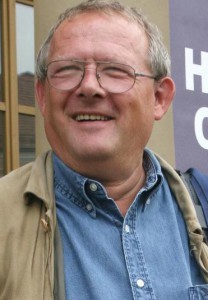
Adam Michnik
Michnik recalled, “He related to people with understanding, but he was steadfast when it came to principles. He had no tolerance for cowardice in the face of dictatorship. This is clear in his poems and essays—any one of them could have landed him in prison.”
“The game is bad because we stand, from the beginning, at a disadvantage; but it would be even worse, if we were to admit that—as a result of the certainty of failure—the game is not only bad, but completely senseless. Acting with dignity in this stupid situation, putting on a brave face, depends on finding some sense within it. We will not defeat our opponent in this way; but we will, at least, throw a stumbling block in his path. Nothingness is keenly interested in propagating the feeling of meaninglessness, which paves the way for its progress and eases its task. Until the very end, Staszek kept erecting stumbling blocks before nothingness.”
“In an essay about Auden, Staszek wrote that poetry ‘is not able to eradicate evil from us. But it allows us, at least, to bring this evil to consciousness. Precisely because we are condemned to the presence of evil within ourselves, we need, all the more, to become conscious of it.’”

Adam Zagajewski
So how did he wind up in Cambridge, Massachusetts? Barańczak spent years applying, unsuccessfully, for a visa, before he finally got one: he accepted the chair in the Slavic Languages and Literature Department at Harvard.
Irena Grudzińska Gross remembers visiting him there: “Although Staszek’s talents, intelligence and industry were somewhat intimidating, those who were lucky enough to know him more intimately were enchanted by his pronouncements on literature, his wit, his modesty and kindness, which he would abandon only when (and these moments were terrible) he encountered a bad translation or a very stupid book. He was a great companion (when one was able to drag him away from his work) on the excursions, organized by [his wife] Ania, to the Massachusetts beaches, historical landmarks, and great open air restaurants. Indoors, it was a great pleasure to listen to the music he loved, to watch over and over the cult movies he and Ania knew by heart: The Godfather, White Sheik or Some Like it Hot.
From Adam Zagajewski:
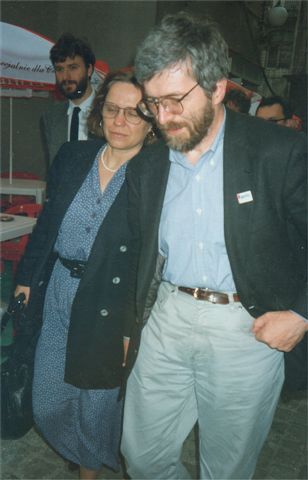
Stanisław Barańczak with wife Anna (Photo: Mariusz Kubik)
Death deprived us not of a theoretician, nor even of an author—but, above all, of an exceptional human being. Yes, a human being and a poet. On that day, when Stanisław’s funeral was being held in the American Cambridge, the Kraków Opera reopened its production of Winter Journey by Schubert and Barańczak (I like to look at the juxtaposition of these two names). Those, who could not fly to Boston, gathered together in the red chamber hall of the opera and listened to the songs of Franz Schubert, to which Stanisław had written poems—poems that were exquisite, simultaneously mystical and cabaret-esque, tragic and funny. The baritone Andrzej Biegunsang beautifully. It seems to me that I was not the only one for whom this was an extraordinary experience, and not only because I knew, we knew, that in the same moment, at the Mount Auburn cemetery in Cambridge, a crowd of Stanisław’s friends had gathered to farewell him.
It was as if two completely different generations, one hundred and fifty years apart, embedded in different countries, in different eon and languages, condemned never to meet—Franz Schubert, an artist of the era of tailcoats and candles, of cannons and diplomatic lies, a witness to the Congress of Vienna, and Stanisław, living in the shadow of Yalta and Potsdam, in the shadow of lies even more monstrous, systematic and triumphant, in the shadow of an incurable illness—united themselves that afternoon in an ideal artistic form. They met in the great, sweet melancholy of art, in a sadness made mild by perfection of form and expression, by the bitter joy granted to us by wonder, however brief. A tragic wonder, which for a moment allows us, almost, to accept joyfully something which cannot be accepted—the fact that everything perishes in the cold fire of time, the most patient of killers.
President of Poland, Bronisław Komorowski said at the memorial that “choosing to remain abroad, he ceased to be a refugee from Poland, emerging instead as the country’s untiring ambassador.”
 You still think genius is overstating the case? Here’s what Nobelist Joseph Brodsky said to fellow Nobelist Miłosz on the subject, in the interview between the two included in Czesław Miłosz: Conversations:
Brodsky: The boy is a genius, Stasiek, ya?
Miłosz: Fantastic.
Brodsky: A fantastic genius, indeed.
Can’t quarrel with that. Read the whole thing here.
Tags: Adam Michnik, Adam Zagajewski, Barbara Toruńczyk, Bronisław Komorowski, Czeslaw Milosz, Franz Schubert, Irena Grudzińska Gross, Stanisław Barańczak
Posted in Uncategorized | No Comments »
Marci Shore on Ukraine, a graduate seminar via Skype, and “the return of metaphysics”
Saturday, August 29th, 2015
 Intellectual and cultural historian Marci Shore remembers Tony Judt in the current issue of the New Yorker, which quickly segues into the current plight of Ukraine:
“We are unwise to laugh too quickly at those who describe the world as a conflict between good and evil,” Tony said, in a lecture in 2003. “If you can’t use the word ‘evil,’ you have a real problem thinking about what happened in the world.” In February, 2014, the Polish philosopher Marcin Król told an interviewer that Europeans were facing a serious political crisis and a potentially fatal spiritual crisis: they had ceased asking themselves metaphysical questions, questions like “Where does evil come from?” As Król’s friend Adam Michnik, the Polish writer and dissident, once said to Václav Havel, “This is a civilization that needs metaphysics.”
Marci reminds us of Judt’s “insistence on the historian’s moral responsibility not only to understand, but also to engage.” Her own form of engagement, or one of them, took the form of skyping in for graduate seminar on Judt’s Thinking the Twentieth Century, Israel: An Alternative, and Past Imperfect. (The first is an excellent series of conversations between Judt and Timothy Snyder, who happens to be Marci’s husband.) “And so this spring, from my office at Yale, I saw Mykola [a graduate student and now soldier] in uniform on my computer screen, the unmarked walls of a Soviet-built bunker in the background. He had Skyped in as well, from the undisclosed location, and he appeared on one half of my screen; Yaroslav [Hrytsak], together with Mykolas’s classmates, appeared on the other half.”
In response to Michnik’s call, she said:
 The Maidan was the return of metaphysics. It was a precarious moment of moral clarity, an impassioned protest against rule by gangsters, against what in Russian is called proizvol: arbitrariness and tyranny. It united Russian-speakers and Ukrainian-speakers, workers and intellectuals, Ukrainians and Jews, parents and children, left and right. The Ukrainian historian Yaroslav Hrytsak … described the Maidan as akin to Noah’s Ark: it took “two of every kind.” For Yaroslav, the wonder of the Maidan was the creation of a truly civic nation, the overcoming of preoccupations with identity in favor of thinking about values. People came to the Maidan to feel like human beings, Yaroslav explained. The feeling of solidarity, he said—it cannot be described.
You can read more about Marci’s unusual graduate seminar here.
Tags: Adam Michnik, Marci Shore, Marcin Król, Timothy Snyder, Tony Judt, Václav Havel, Yaroslav Hrytsak
Posted in Uncategorized | No Comments »
The “politics of the sinless” and the “superficiality of the everyday”: Michnik, Havel, and the post-communist world
Saturday, February 21st, 2015

Long friendship: Michnik and Havel in 2011
Marci Shore, acclaimed author of The Taste of Ashes: The Afterlife of Totalitarianism in Eastern Europe, has written an important article – indispensable writing, really – over at the Weekly Standard. It’s one that merits not only reading, but reading – so I’m printing out a version for slow reading when I get some more work done this weekend. The focus of her essay is a Adam Michnik‘s The Trouble with History, edited byIrena Grudzińska Gross and published last year by Yale University Press. The Book Haven has written about Polish journalist and Solidarity leader Michnikhere and here, and about Marci here and here andhere and about Irena here and here. Read Marci’s article in its entirety here. Fellow dissident Václav Havel, the playwright, essayist, and president of the post-communist Czech Republic, also plays a role in the piece – we’ve written about him here and here and here. A few excerpts from Marci’s article below:
The story of “living in truth” involves urban intellectuals hiking up a mountain. In August 1978, four Charter 77 signatories (including Havel, who was not ordinarily much of a hiker) met with their Polish counterparts (including Michnik) on Sněžka Mountain on the Czechoslovak-Polish border. Havel pulled a bottle of vodka from his backpack. A lifelong friendship was not all that resulted from that first encounter between the two men.
On Sněžka, they spoke about the political resonance of seemingly insignificant moral acts. Michnik asked Havel to write down his thoughts. Three months later, an underground courier appeared at Michnik’s Warsaw apartment with a manuscript entitled “The Power of the Powerless.” Havel’s essay introduced an ordinary green-grocer who, every morning, displays in the shop window a sign stating: “Workers of the world unite!” Neither he nor his customers believe in the Communist slogan. Even the members of the regime no longer believe in it. All know it to be a lie.
 Yet what else can the greengrocer do? If he were to refuse to display the sign, he could be questioned, detained, arrested—which suggests that displaying a slogan in which no one believes is of great importance. If, one day, all the greengrocers were to take down their signs, that would be the beginning of a revolution. And so the seemingly powerless greengrocer is not so powerless after all. He bears responsibility; by failing to “live in truth,” people like the green-grocer “confirm the system, fulfill the system, make the system, are the system.”
This is a diagnosis of post-1968 communism as a descent into inauthenticity, and it comes not from the comfortable classics of Western liberal (or conservative) thought but, rather, from Martin Heidegger.
***
One lesson for the West was about responsibility in conditions of moral ambiguity. In Havel’s autobiographical one-act play Audience (1975), Havel’s alter ego Ferdinand Vaněk is a dissident playwright working at a brewery. The secret police have demanded that the brewmaster file weekly reports on Vaněk. The brewmaster becomes nervous: He finds it difficult to compose the reports. Could Vaněk, perhaps, write them? “You could do that much for me, couldn’t you?” he asks Vaněk. “It would be child’s play for you! You’re a writer, damn it, right?”
Vaněk appreciates the brew-master’s kind treatment of him; nonetheless, he refuses to write the reports about himself. For Vaněk, this is “a matter of principle.” The brewmaster breaks down:
And what about me? You’re just gonna let me sink, right? You’re just gonna say, fuck you! It’s okay if I end up being an asshole! Me, I can wallow in this shit, because I don’t count, I ain’t nothin’ but a regular brewery hick—but the VIP here can’t have any part of this! It’s okay if I get smeared with shit, so long the VIP here stays clean! . . . All I’m good for is to be the manure that your damn principles gonna grow out of . . .

Decries “official memory politics”
In Audience, everyone is implicated: the regime, the brewmaster, Vaněk himself. The brewmaster is a variation of the greengrocer; he is both victim and oppressor.
For Michnik, among the disappointments of post-communism has been the rise of right-wing nationalist populism, accompanied by an official memory politics known as “historical policy.” The essence of historical policy is a denial of moral ambiguity and a failure to take responsibility. It is an attempt to enforce a national historical narrative that presents “the thesis that all Polish disasters were the result of Polish benevolence, trust, and gentleness, and of the malice and cruelty of foreigners.”
For Michnik, historical policy is absurd: Communism had not simply been a Soviet occupation; everyone had taken part. In order to do something good, one had to participate in a system that was evil. Between heroes and villains there were many shades of gray. This was among the reasons why “lustration”—the purging from government and public life of those who had collaborated with the secret police—was not a straightforward matter. Many were put on secret police lists of potential informers without their knowledge. Others found themselves on those lists because they had once met with an agent at a restaurant or had succumbed to threats to their children.
Moreover, those placed most at risk by lustration were those who had been in the opposition—after all, it was their circles the secret police had tried to infiltrate. Those safest under lustration were the greengrocers. The post-Communist antipathy towards the dissidents, Havel believed, had its roots in the dissidents’ serving as people’s bad consciences. He and Michnik were among those who, under communism, had sat in prison the longest. They were also among those most willing to forgive. For Michnik, historical policy and lustration reflected a Jacobin-like impulse to impose a politics of the sinless. And the problem with revolutionary purity was that it led to the guillotine.
***
Read her article. Please.
The trouble with revolution, Michnik finds, is also its aftermath: the superficiality of the everyday. Once upon a time, East Europeans had stayed up all night copying censored poems by hand. Now, no one had time to read serious literature. The omnipresence of Communist propaganda had been replaced by the omnipresence of quasi-pornographic tabloids. The revolution had brought the end of censorship. Then, the market had taken over—and had proven to be tawdry. “Suddenly all great value systems are collapsing,” Michnik observed.
“[A]long with the development of this consumerist global civilization grows a mass of people who do not create any values,” Havel said during one of his last conversations with Michnik. For Michnik, this “axiological vacuum” was “a typical phenomenon of periods of restoration as described by Stendhal in The Red and the Black: this is a time of cynicism, intrigues, careerism.” Michnik grew preoccupied with Julien Sorel, Stendhal’s weak plebian hero who seeks authenticity in illicit love affairs: “Let everyone take care of himself in the desert of egoism called life,” Julien says.
In 1989, Michnik’s friend, the philosopher Marcin Król, was among those who had considered liberty to be the great priority. But individualism began to dominate all other values. “We were stupid,” Król said in an interview last year. No longer does anyone pose metaphysical questions like “Where does evil come from?” The dramas of characters like Julien Sorel resulted from their awareness of the weight of their actions. The lack of an answer to the question of whether they behaved well or badly was the source of great suffering. “Today,” Król said, “the lack of an answer does not hurt.” And that is the problem: It shouldhurt.
Tags: Adam Michnik, Irena Grudzińska Gross, Marci Shore, Marcin Król, Václav Havel
Posted in Uncategorized | No Comments »
Poland’s Adam Michnik: “I think Putin is going to break his neck with his reckless policy.”
Sunday, November 2nd, 2014
A simple impulse of compassion
Adam Michnik is a legend in the history of Solidarity movement in Poland, and though we had corresponded a few years back, we’d never actually met (we had a close call in Kraków, here).
Hence, I made the hectic rush-hour trek to Berkeley to hear him speak at the cozy, wood-paneled Morrison Reading Room of the university’s Doe Library last week. The venue has warm associations for me – it was the site of the last public appearance of Czesław Miłosz in America in 2000, and the place where I met the Nobel poet before our first interview a few days later. It was a fitting association for Michnik, too: he told me later that Miłosz is his “guru,” as well as the man he considered the greatest Polish poet of the 20th century.
I arrived at a few minutes late for the gathering (parking at Berkeley is worse than Stanford, which takes some doing nowadays), but I caught most of historian John Connelly‘s opening remarks, which were excellent – more on that later.
Freedom in 1989 was the miracle that no one expected to happen so soon, said Michnik, speaking through a translator. It was also the year when “the fridge broke and everything began to stink. Bad spirits and good spirits were released,” he said, recalling the challenges with lustration and various ethnic and social disputes.
He didn’t stick to script, which was officially titled “25 Years of Democracy in Poland: Accomplishments and New Challenges.” No wonder, given events in Eastern and Central Europe right now. He called Putin “a gangster” who led “a bandits’ regime.”
“Russian propaganda today resembles the Moscow propaganda of 1937,” he said. It was “very effective – effective because it divided opinion in Europe.” He recounted the complicated and long history of moving borders, which left open a situation where any boundary can be challenged as inauthentic and provisional, and used to legitimize land grabs. “There are no ‘just’ borders in Central and Eastern Europe,” he said. “The easiest way to destabilize is to encourage disputes among ethnic or social groups.”
He said his Russian friends are pessimistic about the future. However, “I am an optimist. I think Putin is going to break his neck with his reckless policy, and the people around him may be the ones to break his neck. I won’t cry over him.”

“Democracy needs ordinary heroes.”
Now, the introduction: Connelly described Michnik in the days before Solidarity, the Polish trade union that became a national non-violent movement to oust Communism. It’s a history worth recounting, because American politics has become so parochial and blinkered that most folks don’t seem to know much of any history before George W. Bush, or the backstory of any place even farther away than Texas or Iowa.
Connelly explained that, as a young student at Warsaw University, Michnik was suspended from his studies several times, once for organizing a historic meeting and talk by Leszek Kołakowski in 1966. Michnik was also a major figure in the 1968 events in Poland in which students demonstrated for greater freedom and were suppressed. In 1969, he was sentenced to three years in prison for “hooligan-like” behavior. In 1976, he helped found KOR , the Committee to Protect Workers, “one of the most important civil society organizations ever founded, in Eastern Europe or elsewhere,” said Connelly. Michnik was, of course, a major figure in Solidarity, in its legal and underground incarnations.
In 1989, he founded what has become Poland’s most important daily newspaper, Gazeta Wyborcza – he’s still the editor-in-chief of Poland’s version of the New York Times. “Michnik is not only a historian, but a leading public intellectual , author of many books of political commentary, and some of the most influential essays ever written, for example ‘A New Evolutionism,” said Connelly.
“What I have just given you is a skeleton biography,” he said. Then he offered a few vignettes “to give you a sense of Adam Michnik body and soul, flesh and blood.”
The first was poet and translator Stanisław Barańczak, a member of KOR, who recalled one scene “with particular vividness,” said Connelly. “I always read this anecdote to students who think that change is impossible and that one person can make no difference.” Here goes:
Stanisław Barańczak with wife Anna (Photo: Mariusz Kubik)
“We stood—Adam and a group of friends—in a corridor of a Warsaw court where the participants of the June strikes in the city of Ursus were being tried. No one was admitted into the courtroom except close relatives of defendants, mostly the workers’ wives. We did not know what was going on inside the courtroom but after an hour or so we heard a sudden outburst of women’s crying piercing the walls. And a while later those weeping, wailing cursing women left the courtroom and made their way through the crowd—each of them stupefied by the fact that as a result of this sham of a trial she would not see her husband for the next two, three, five years and that nothing, nothing could be done about it. I stood next to Adam at that moment. His eyes were dry but I knew him well enough to know that he had just hit upon one of those ideas of his—ideas that at first seemed foolish even to his friends but then somehow always turned out to be right. The same afternoon he started collecting signatures for another letter of protest. KOR, the Workers Defense Committee, was formally founded a few months later, but for me that July afternoon will always remain the actualy beginning of KOR and everything that happened in Poland afterward. It began not with anyone’s political program or ideological statement. It began with a simple impulse of compassion.”
In the second passage, Connelly recalled that Miłosz likened Michnik’s “unbending commitment to non-violence” to Mahatma Gandhi’s satyagraha, in a 1985 essay otherwise permeated with the “gloom of the late cold war of the cynicism and despair.” And so Miłosz wondered:
“What is the efficacy of nonviolence elevated to the level of principle, and applied to the conditions of our contemporary life?…Purely peaceful movements – the Prague Spring of 1968 and Solidarity of 1980-81—have been smashed…What is then the use of nonviolence and what would Mahatma Gandhi have to say on that topic if he were still alive?
“It seems to me that habitual notions of links between causes and effects enclose us in simplistic, mechanistic, and desperate dilemmas. The history of the century provides us with a number of proofs to vindicate the role of actions that appear insignificant and likely to fail, yet are potentially fecund.”
Connelly concluded with a few reflections from Berkeley colleague Ken Jowitt: “Without heroism, public virtues cannot be sustained; they gradually deteriorate into egotistical calculi of social, economic, and political self-interests. … And yet … the charismatic hero abhors, is incapable of, democratically appreciating the deficiencies of average people.”

The cozy Morrison Reading Room in Berkeley
Said Connelly: “Michnik responds to this dilemma in a Weberian spirit. All historical experience, says [Max] Weber, “confirms the truth that man would not have attained the possible unless time and again he had reached out for the impossible. But to do that a man must be a leader, and not only a leader but a hero as well, in a very sober sense of the word.'”
“In short, democracy needs ‘ordinary heroes.’ Adam Michnik is an ordinary hero, a genuine man whose contributions to the culture of democratic individualism and toleration in Poland and the world are fallible and invaluable.”
Michnik seemed to be overwhelmed by the kudos, remarking that they were the kind of remarks usually heard only at funerals. “When you know me better, I lose a lot,” he told the audience.
After the talk, an equally intimate venue – dinner in a private room in Berkeley’s Cafe Liaison. Though the menu was French, the jovial mood was pure Polonia. Wonderful food, great conversation (mostly in Polish), and plenty of French wine – the label was “Ventoux,” which has all those Petrarch associations. Then I headed off into the night to find my car, somewhere in a dark hillside parking lot in Berkeley…

Tags: Adam Michnik, Czeslaw Milosz, John Connelly, Stanisław Barańczak
Posted in Uncategorized | 1 Comment »
“The ultimate power is the power of the powerless”: Václav Havel’s legacy
Saturday, March 3rd, 2012

"He assumed good and humanity in everyone."
My friend Jane Leftwich Curryorganized an evening at Santa Clara University, where she is a professor of political science, to honor the playwright, dissident, and first president of the Czech Republic (and last president of Czechoslovakia), Václav Havel,who died in December.
The Wednesday event served as my introduction to Havel’s plays as well as to the university itself – despite its proximity, I had never seen SCU, which has the old Santa Clara Mission at its heart.
During the evening, a few of the university’s alumni performed staged readings from 1965’s The Memorandum and the much later 2007 Leaving.
The first was distinctly edgier – at least in the excerpted version. A deputy manager introduces a new “official” made-up language in the office, “Ptydepe.” Of course it’s all part of a bureaucratic coup d’état, and the managing director finds himself being edged out. In the second, a chancellor is leaving office – but does he have to leave the state villa, which has been his extended family’s home for years? The play was made into a movie in 2010, marking Havel’s debut as a director.
“We, here in Silicon Valley, do not live in an authoritarian society,” said Janey, who is author of six books on the politics of Central and Eastern Europe. “But we have much to learn from this man who had spent his years as a dissident and a writer and overnight took over as president not because he wanted power but because, as he said, ‘You cannot spend your whole life criticizing something and then, when you have a chance to do it better, refuse to go near it.'”
She gave a few examples of his ingenuity from his life as a dissident:
“He was creative not only in outsmarting the police when he could but also in living his life well in spite of all the pressures on him. There are thousands of stories of this … one that comes to mind here in this setting, is that, when he was in prison with the Archbishop of Prague, he organized chess tournaments – not, as the archbishop said at his state funeral, because Havel really liked chess, but because it provided a cover for Archbishop Duka to say mass under the ruse that the prisoners were just playing chess.

Author Curry
“Havel also laughingly told a s story of skiing up the high Tatra mountains – a struggle as he was both a heavy smoker and a non-athlete. He did it so he could meet at the top, on the border, with Polish dissidents like Jacek Kuron andAdam Michnik – neither of whom were any better skiers or athletes than he was and both of whom could match him as smokers. They came to share ideas and enjoy each other in the only place they could, a ski hut smack on the border of their two nations at the top of the Tatra mountains.” It was a good gamble – “the Czech and Polish secret police were too lazy to ski up the mountains to catch dissidents.”
When he was sworn in as president to replace the man who had imprisoned him, some asked what he would say to departing president Gustáv Husák at the cocktail party that followed the ceremony. “He thought about it and said he supposed they could talk about prison conditions as they had both served time in the same prison – Husak during World War II for being a communist, and he, under communism, for being a dissident. And so they did.”
The incident also illustrated a big theme in Havel’s life and leadership: inclusion, even extending to those who had harmed him. “He assumed good and humanity in everyone, even though most Czechs and Slovaks kept silent rather than lose their peaceful lives.”
After the fall of communism, when questions arose about the controversial policies of “lustration,” a government process to reintegrate former Communist into post-communist public life, “he reminded the nation that each and every one of them, himself included, had been part of making the communist system work. That the fault was shared by all and that each person had to account to himself for what he had done or not done. For Havel, then, the ultimate power was the power of the powerless.”
Steven Boyd Saum, editor of Santa Clara Magazine, also spoke – Saum is also attaché to the Honorary Consul General of the Czech Republic in San Francisco/Silicon Valley.
Saum hailed Havel as a man of “compassion and conscience.” He was “a bourgeois child” who, when denied a higher education under communism, became a lab assistant, a soldier, and a stagehand. “Havel, the man, was a hero.” Arthur Miller called him “the first surrealist president.”
Saum compared him to Thomas Jefferson, in his understanding that loyalties work best when they are to neighbors and communities, rather than monolithic states.

Nice venue
Change occurred so fast in Czechoslovokia that dissidents like Havel quickly found themselves catapulted to power. The skills of a dissident didn’t always translate into the skills of a politician. Havel believed firmly that when you change the system, people will change. He had respect even for the people who had betrayed him and his colleagues, or who had been silent during their persecution – “he stuck up for them.”
His first biographer Eda Kriseova wrote rather a hagiography. “The world needs heroes,” she said. “I am giving you one.”
(Another biographer, John Keane, author of Václav Havel: A Political Tragedy in Six Acts, answers questionshere.)
Tags: Adam Michnik, Arthur Miller, Eda Kriseova, Gustáv Husák, Jacek Kuron, Jane Leftwich Curry, John Keane, Steven Boyd Saum, Thomas Jefferson, Václav Havel
Posted in Uncategorized | No Comments »
Timothy Snyder: On dissent and “the stories people tell about themselves”
Wednesday, January 25th, 2012

Provocative author of "Bloodlands"
You don’t have to live under a totalitarian government to understand some of the head trips Timothy Snyderof Bloodlands fame describes in his provocative and incisive interview over at the Browser. We run them through our minds daily – at home, in the workplace, in our social circles.
Which hardly undermines the stories of people for whom the stakes were astronomically higher – those who face prison, death, or poverty for risking free expression. But it does make his observations universal.
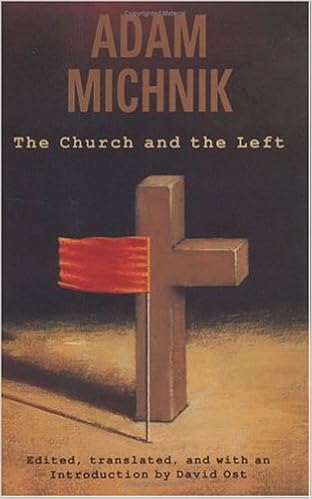
His responses in the Q&A (with Alec Ash) are heartbreakingly insightful. But then, he is often quoting maestros. He recommends five books: George Orwell‘s Homage to Catalonia, Czeslaw Milosz‘s The Captive Mind, Adam Michnik‘s The Church and the Left, Milan Kundera‘s The Book of Laughter and Forgetting,Václav Havel’s The Power of the Powerless.
“The people whose books I’ve chosen lived in regimes which not only monopolized violence but threatened it in an everyday sense. And some of them suffered as a direct result of what they wrote,” he said.
 Tim’s responses, and the books he has chosen, do not just tell us (as the subhead says) “how to challenge the over-mighty”; more importantly, they all demonstrate the way we delude ourselves – regardless of political stripe, personal beliefs, or external circumstances.
I have my caveats. He seems to put a lot of stock in such terms as “liberals”; I find that these labels increasingly meaningless if not misleading (and highly elastic), and have come to feel that it’s dangerous to identify oneself with any political group. Too often among my colleagues, such labels become simple synonyms for “good,” “truth,” and “people who think like me.” Which means you can do anything you like, because you’ve a priori identified yourself with the good. And why is the piece, which praises non-violence, illustrated with a clenched fist from Wikipedia Commons? Ah well.
That said, how can you argue with passages like this?
… The Captive Mind by the celebrated Polish poet Czeslaw Milosz, seems to have some overtones of 1984 itself.

Milosz
Yes. Milosz tried to explain – as the title suggests – how thinking people could accept communism from inside the communist system. How does one not resist or just endure, but actually place one’s mind in the system? He points to a number of ways in which the mind can adapt. You can accept one larger truth that guides your interpretation of all of the smaller untruths, accept a vision of the future that is so bright that it drives away the shadows of the various dark acts of your own time and place. Or you can collaborate on the outside but preserve an inner core of yourself that does not collaborate on the inside.
Milosz’s point was that all of these things are possible as human adaptations to a situation, but impossible as ways of preserving humanity. In fact they’re nothing more than stories people tell about themselves, as they give in to a system which is actually inferior and repressive.

Kundera
Why did you choose Milan Kundera’s The Book of Laughter and Forgetting?
Milan Kundera was of course not really a dissident, but this book gets across the heartfelt reality of Stalinist faith. Kundera was a young Stalinist, as were his friends. So he knows what it was like to be on the inside, to have certainty about the rest of the world and to believe that everyone who didn’t share that certainty was a fool. To know where things were going and what you wanted from society – that glowing, overwhelming sense that one is young and the world belongs to you. Kundera really gets that sense across, and I think that’s incredibly important.
Also apropos of Czechoslovakia and very topical, your final selection is Václav Havel’s essay The Power of the Powerless.

Havel
In the end I think Havel will be remembered as theoutstanding East European dissident writer, and he will be remembered as such above all for this essay. Its central point is that even a communist regime that controls the media and exercises a great deal of power depends ultimately on an almost visible collaboration with society – society meaning individual decisions taken by individuals, which accumulate to have a universal appearance.
And what does Havel say to that inner voice that you shouldn’t risk personal suffering and put your head above the parapet?
He understands it. There is this Christ-like patience, and he’s not programmatic. Havel doesn’t call for everyone to do what’s beyond them. He asks them to do what they can, and then – like [Adam] Michnik – he leads by example, does things his own way and pays the price for it. Michnik and Havel are among the dissidents who have spent the longest time in prison.
Read the whole thing here.
***
PUBLIC SERVICE ANNOUNCEMENT: Some time ago, we explained that the Book Haven was moving, and there might be a few cyberspace bumps in the subsequent days as we switched servers. It never happened. But it is happening in the next 24 hours. Bear with us. All shall be well and all manner of things shall be well …
Tags: Adam Michnik, Czeslaw Milosz, George Orwell, Milan Kundera, Timothy Snyder, Václav Havel
Posted in Uncategorized | 1 Comment »
What he meant: postscript on Adam Michnik, Czesław Miłosz, and the Warsaw Uprising
Thursday, May 26th, 2011
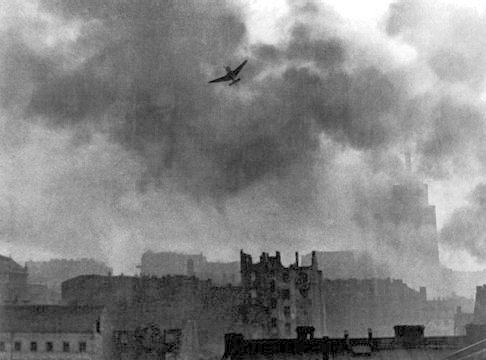
The bombing of Warsaw's Old Town
A few days ago, I reported onAdam Michnik‘s haunting remarks during the Czesław Miłoszfestival. He recalled a few brief months of freedom in 1981, with the heady rise of Solidarity and the Polish poet’s return to Warsaw after decades of exile:
“It was a time of euphoria, carnival – it was our victory,” he said.Miłosz was more cautious. He told Michnik, “The atmosphere feels like just before the Warsaw Uprising. Please be careful.” Tanks rolled into Warsaw and martial law was declared a few months later.
I was intrigued, but somewhat puzzled by Miłosz’s comment. I had always assumed that the days before the Warsaw Uprising were full of terror and apprehension. I chalked up Michnik’s recollection to pure prescience on Miłosz’s part.
Then, bumping along in the train between Warsaw and Vilnius, I found my answer. I ran across this passage in the new collection of essays, Proud to Be a Mammal, in a reprinted piece called simply “G.G.”
Little by little the time was drawing near for the destruction of Warsaw. The uprising was a blameworthy, lightheaded enterprise … Handfuls of people stood on street corners, watching with a quiet smile as trucks were loaded with wardrobes, mirrors, rugs – the contents of German offices and private homes. They were fleeing. No one was afraid of them anymore.

Michnik remembers
In other words, what the Polish people saw as a retreat was simply the Germans evacuating a city they knew was about to be destroyed.
The posters that had been tacked up, ordering all males to report for work on the fortifications, were received with jeers. You could already hear Russian artillery fire. Rumors of an armed uprising were greeted joyfully: a chance to throw oneself at one’s tormentors and take revenge … Soon, however, came the news that there would be no uprising. One of my Socialist colleagues told me that to take any sort of action now, when Mikołajczyk, the premier of the London government [in exile], was flying to Moscow, would be nonsense. Stalin was too clever to negotiate with anyone using such a trump card, and whoever tried to outsmart him would never be forgiven.
The military leaders (caught between two fires, because the Russian Radio broadcasts called for the taking up of arms) did not enter into such subtleties; as a result their judgment was incompetent. The command was given so suddenly that it found most of the units without weapons. …
That day, the first of August, Janka and I were walking over to Tiger’s for an after-dinner chat and a cup of tea. I had something terribly important to discuss; namely, my new translation of an English poem. On leaving for a walk one should never be too sure of returning home, not only because something may happen to one personally, but also because the house may cease to exist.
The older I get, the more uncomfortable I am with any group emotions – whether crowd hatred or crowd euphorias. And sometimes the euphorias are more blinding than the hatreds.


Komentarze
Pokaż komentarze (1)